


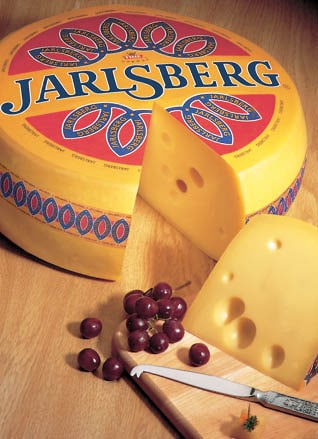
In 1956, Professor Ole M. Ystgaard from the Agricultural University of Norway started to make a soft, medium-fat cheese with holes. The new cheese was named after Count Wedel Jarlsberg, the owner of an estate by the Oslo fjord, where an earlier version of this cheese had been made between 1815 and 1832. The Jarlsberg estate can trace its history back to the Vikings and the last Count of Jarlsberg approved the name before Jarlsberg was introduced.
Jarlsberg® has an original taste based on the 1956 secret recipe. It is a medium fat, firm interior ripened cheese with a mild nutlike flavour and naturally formed holes.
Usage
One of the attributes of Jarlsberg® is its versatility. It can be used on cheese platters and in sandwiches, salads, hors d’oeuvres and for cooking, as it melts easily and evenly.
Physical Description
| Composition: | Firm texture with eye formation, smooth and sliceable |
| Case packing |
|
| Shelf life: |
|
| Moisture: | 45% |
| Fat: | 28% |